For sustainable manufacturing
A principle that guides every choice
Sustainability is not an added value, but the founding principle of our work.
We have always transformed natural resources and by-products into high-value ingredients, in a manufacturing model that reduces any environmental impact and generates benefits for people, the environment, and the community.
Every investment, every innovation, and every industrial decision stems from a simple idea: to grow by respecting what surrounds us.
A footprint that shrinks every year
Making our processes more sustainable means continuously improving. We invest in cleaner practices and technologies in order to optimise energy consumption and reduce emissions, choosing solutions that combine efficiency and responsibility.
and reused daily.
Advanced filtration systems to improve air and water quality.
Constant updating of the wastewater treatment plant.
New manufacturing department powered by a photovoltaic system.
Cogeneration: simultaneous production of electricity, hot water, and steam.
Circular economy:
the value of each resource
The circular economy is in our DNA.
Each Lapi Gelatine product comes from the desire to use materials that would otherwise be lost, thereby reducing waste and maximising the value of each resource. Resources that, for Lapi Gelatine, a member of the Gelatine Manufacturers of Europe (GME), are produced with total respect for quality, safety, and animal welfare.
recovered sources
Fish gelatine
Derived from freshwater fish (Tilapia and Pangasius) farmed under responsible aquaculture conditions in Vietnam and South America, using controlled and traceable supply chains.
Bovine gelatine
Obtained from European bovine hides from qualified suppliers, transforming by-products into precious resources.
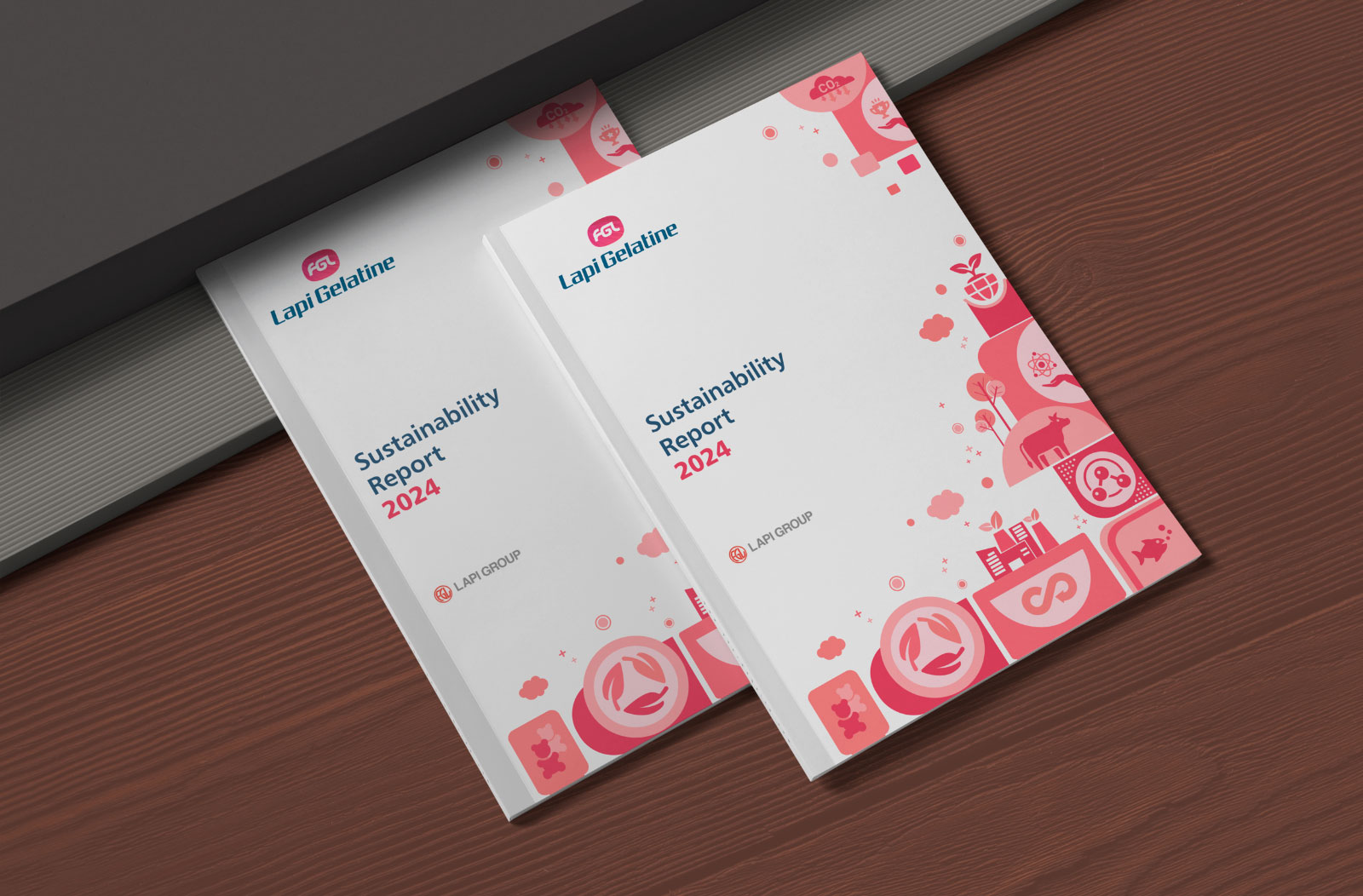
First Sustainability Report
A new step in Lapi Gelatine’s path to sustainability.
In 2025, Lapi Gelatine prepared its first voluntary Sustainability Report, which provides an organic account of the path taken by the company and makes the discussion on environmental, social, and governance issues more structured.
The Report collects the data, objectives, results, and initiatives that concern the company’s impact, the people, the territory, and the relationships with stakeholders.
A document that represents a starting point to continue measuring, improving, and making Lapi Gelatine’s commitment increasingly transparent.

Environmental and social responsibility projects
Alongside the certifications and sustainability standards, Lapi Gelatine works on projects which focus on the environment, biodiversity, the territory, and the community.
Biodiversity
Contribute to the protection of ecosystems and pollinators.
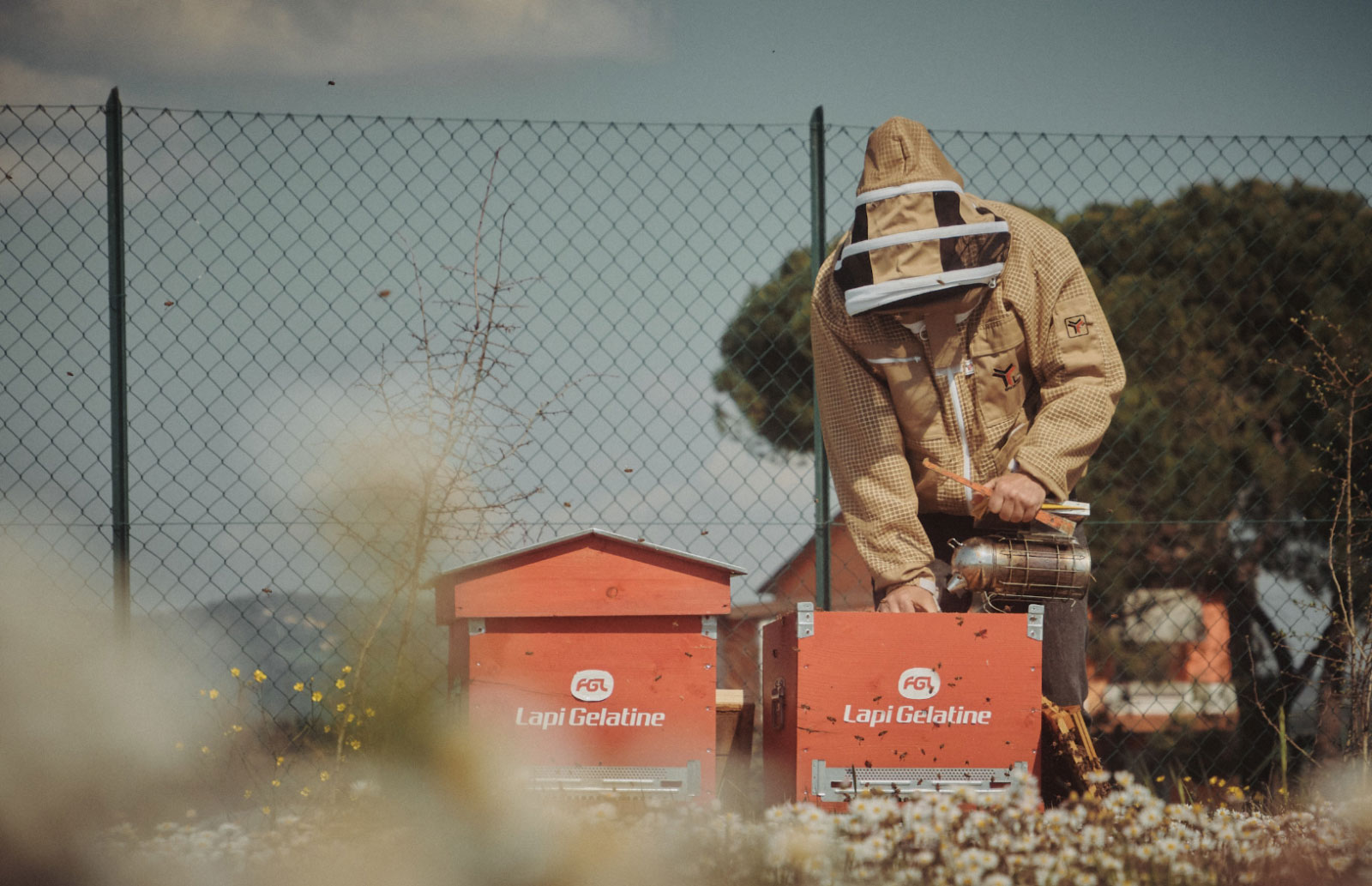
In 2025, the Lapi Gelatine plant in Empoli welcomed two beehives, with about 120,000 bees, thereby helping to create a space dedicated to biodiversity on the company’s premises.
The introduction of bees emphasises the importance of pollinators to a balanced ecosystem and helps raise awareness of their role in protecting the environment.
A project that also brings biodiversity into company spaces and strengthens our bond with the territory.
Commitment to sustainable aquaculture
Promote the responsible management of aquaculture resources.
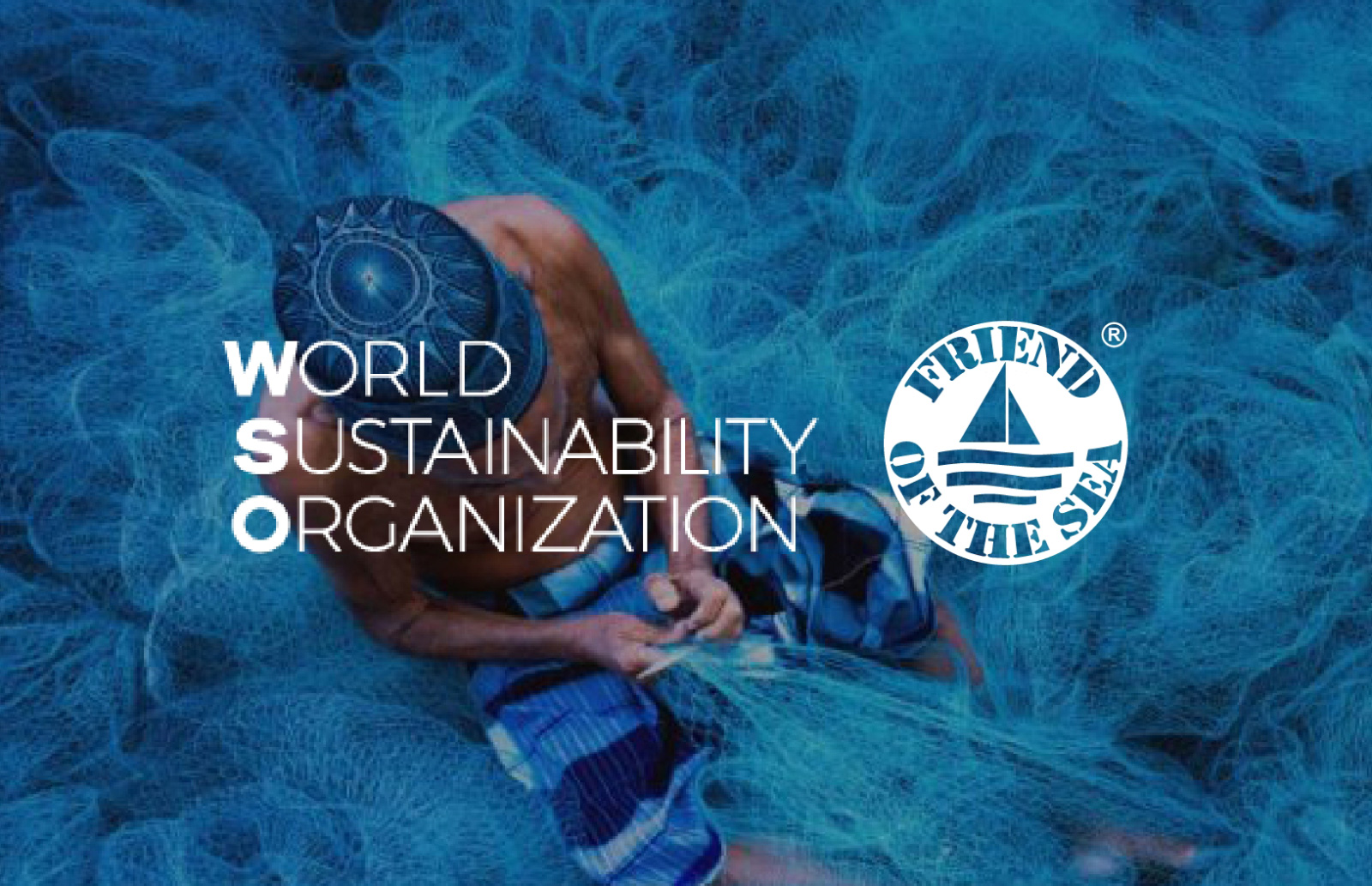
Lapi Gelatine works to enhance aquaculture resources in a responsible way, with particular attention to the traceability and sustainability of the supply chain.
Through certifications and standards dedicated to the raw materials of aquaculture, we support responsible sourcing practices and greater attention to aquaculture ecosystems.
A commitment that is part of our approach to the sustainability of aquaculture, biodiversity, and the circular economy.
Sustainable trade shows and events
Reduce the impact, including in the design of spaces.
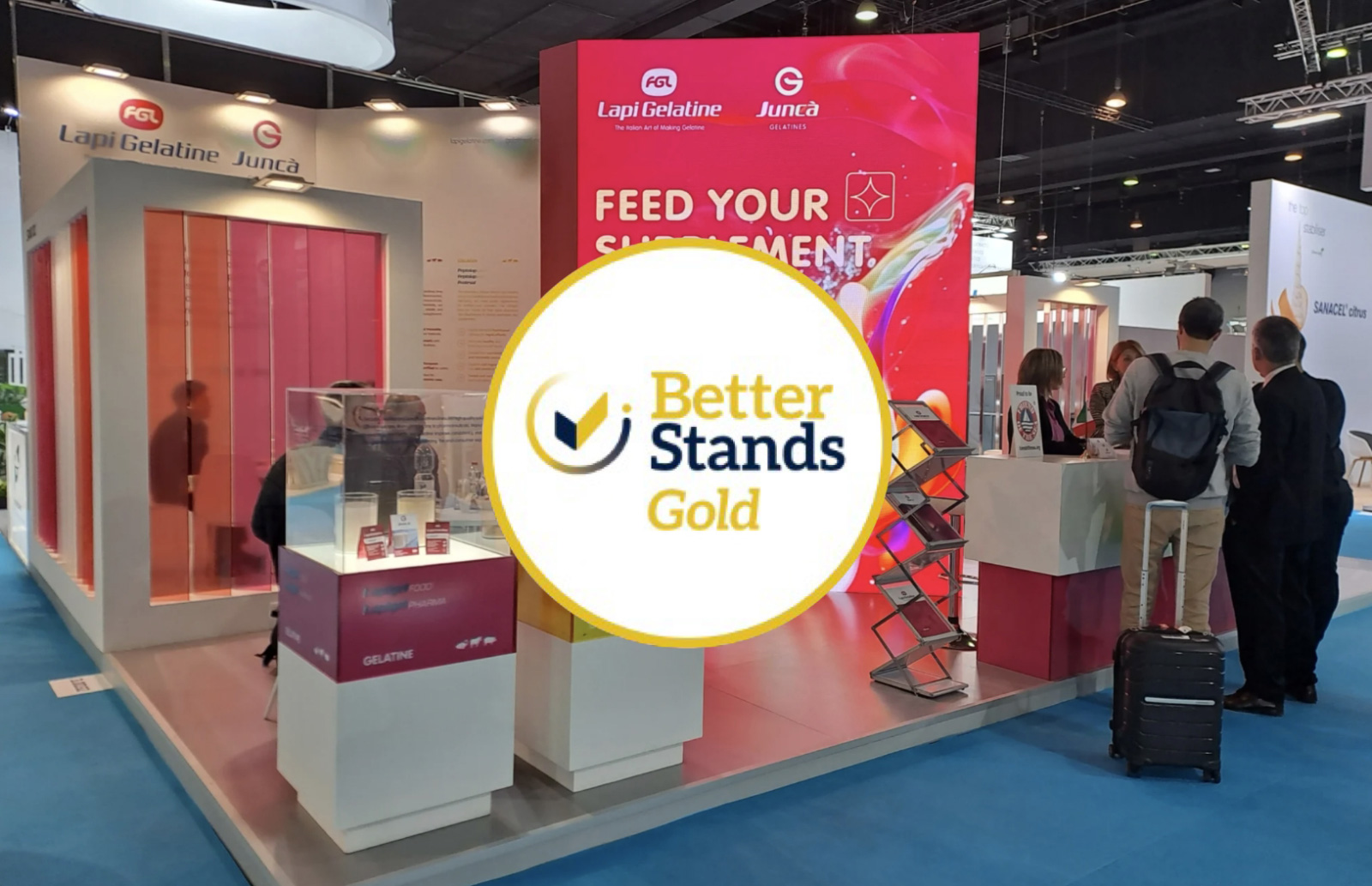
Lapi Gelatine also applies its sustainability principles to participation in trade shows and events through design choices oriented towards the reuse and responsible use of resources.
Over the last two years, our stands have taken the “Better Stand Award” Gold Medal for the use of reusable materials and low-impact solutions.
An approach that integrates sustainability, functionality, and corporate identity also in the spaces dedicated to communication.